
- Home
- Governance
- Academics
- Programmes
- Admissions
- Library
- Students Life
- Research Projects
- Tenders

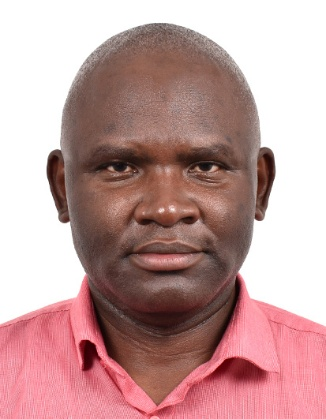
Dr.-Ing. Nashon Juma Adero
Dr.-Ing. Nashon Juma Adero, a geospatial and systems modelling expert and lecturer in surveying, GIS, and sustainability-related courses, is the current Dean of the School of Mines and Engineering (SME).
Dr.-Ing. Adero holds a German doctoral degree in engineering/Doktor-Ingenieur (Dr.-Ing.) in Mining Engineering from TU Bergakademie Freiberg (TUBAF), MSc degree in Resources Engineering (MSc.Res.Eng.) from Karlsruhe Institute of Technology (KIT), and a BSc degree in Surveying from the University of Nairobi.
He brings to SME a wealth of interdisciplinary experience spanning engineering surveying practice, advanced systems modelling, policy research and analysis, and academic leadership, strengthening its capacity for innovation and impact. His extensive international networks and engagement in research, youth mentorship, industry collaboration, and global development dialogues are key to shaping context-driven solutions, globally competitive graduates, and sustainable development outcomes.
He is a published scholar in applied system dynamics, geospatial analysis and modelling, sustainable mining, and multicriteria decision support systems for sustainable resource and infrastructure planning and development. He is a co-author of several seminal books in the fields of geomatics and sustainable development, including Geospatial Information to Support the UN’s Sustainable Development Goals (2026), Project Design for Geomatics Engineers and Surveyors (2023), and the Future of Africa in the Post-COVID-19 World (2021). For over 15 years, he has been offering consulting and capacity-building services in surveying and mapping, geospatial data analysis and modelling, professional training, environmental policy development, and policy research and analysis.
Trained as a policy analyst with the Kenya Institute for Public Policy Research and Analysis (KIPPRA) and a governance thought leader with the Graduate and Research Academy (GraFA) of TU Bergakademie Freiberg, he sustains active engagement in media, publishing columns, panel discussions, and keynotes on global development affairs.
His recent groundbreaking research culminated in the development of the Taita-Taveta Integrated Mine Planning Model (TIMPM). TIMPM is a geospatial and system dynamics model recognised as Africa’s first integrated, multisectoral, regional, and strategic decision-support tool. It enhances transparency, stakeholder engagement, and sustainability in mining sector governance by incorporating spatial development dynamics and the systemic linkages between mining, agriculture, and other key regional economic sectors, while also addressing the critical imperatives of water resources management, forest protection, and overall ecological integrity.
Beyond academia, he is actively engaged in youth mentorship for lifelong skills and career development as the founder of the Impact Borderless Digital (IBD) youth mentorship programme, with a strong focus on preparing young professionals for leadership and innovation in the digital society. As a hobby, he has been making science social for the youth by involving them in developing prediction models for the crowd-pulling FIFA World Cup matches.
He has won multiple awards in education and skills development, including being declared the Mining Educator of the Year 2025, Outstanding Enactus Faculty Advisor, and winner in the 2020 “ACCESS Idea Competition” for African lecturers on addressing youth unemployment. He is currently the elected national representative of professionals and academia in the Executive Board of the Kenya Chamber of Mines (KCM). He has membership in several professional bodies including the International Society for Mine Surveying (ISM), the System Dynamics Society, Elsevier Researcher Academy (Reviewer), the Institution of Surveyors of Kenya (ISK), FORCE11, DAAD Scholars Alumni, and the German Alumni Water Network (GAWN).
Dr.-Ing. Adero’s deanship is anchored on the School’s vision framework: Excellence, Efficiency, Empowerment, and Innovation, positioning SME as a modern, student-centred and industry-relevant school connecting stakeholders in the mining–environment–society nexus. The following ten-point agenda will help realise the vision.
To translate the SME vision into measurable results, the School is acting on the following structured ten-point transformation agenda.
Expanding enrolment and diversifying the School’s offers through targeted outreach and networking, champions in the persons of staff, alumni and student ambassadors, stronger value propositions, and programme growth aligned to labour-market and national development priorities.
III. Efficiency enhancement in practical delivery and workload management
Strengthening efficiency in teaching delivery, laboratory and field training coordination, and academic workload balance—without compromising the intensive field and industry exposure required in mining and natural resources engineering.
Pursuing grants, consultancies, laboratory services and strategic partnerships to strengthen facilities, fieldwork, research productivity and long-term School sustainability.
Institutionalising visible recognition, mentorship, and supportive competitiveness to strengthen morale and measurable performance among staff and students.
VII. Postgraduate excellence and accelerated milestone progression
Strengthening postgraduate throughput by treating research as a disciplined ladder of milestones—from coursework to proposal, data, publication, and defence.
VIII. The Dean’s State of the School Address as an accountability tradition
Institutionalising a recurring, data-led “State of the School” platform to report progress, align priorities, and mobilise staff, students, alumni and partners around shared targets.
Launching the Dean’s Board of Excellence as a high-impact, low-bureaucracy mechanism to celebrate measurable achievement, consistency, resilience (“Keep Up”), research and innovation, practice-oriented impact, ethics and sustainability, and leadership and service—making progress visible and motivational.
Growing SME’s outward-facing profile through strategic communications, evidence-driven storytelling by alumni, students and staff, the SME Magazine platform, and international positioning—showcasing SME as a credible centre for mining education, responsible resource governance, and sustainable engineering innovation.
Within the first 100 days, the Dean’s office has accelerated SME’s visibility and performance culture through: