

Critical Minerals, Critical Skills
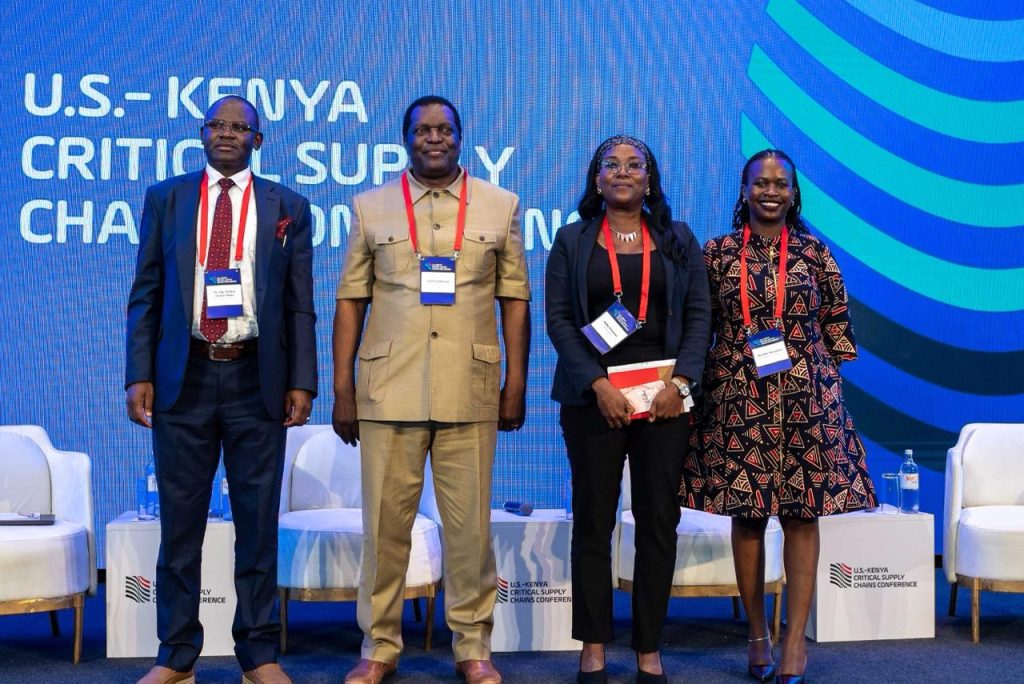
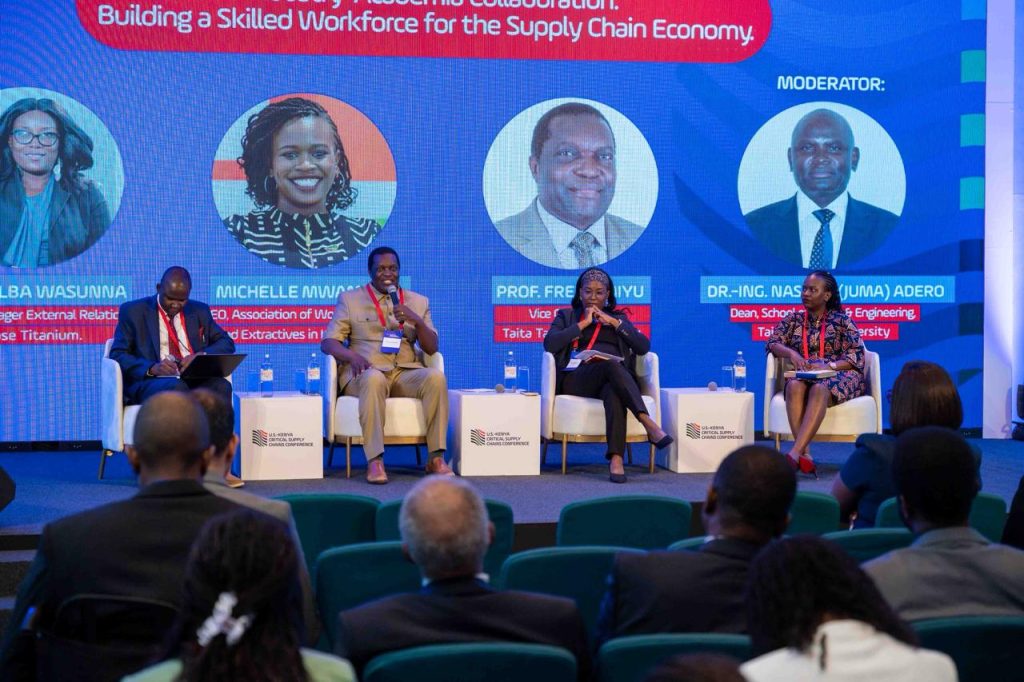
The U.S.-Kenya Critical Supply Chains Conference was held at the Radisson Blu Hotel in Nairobi on 30th January 2026. It was convened jointly by the American Chamber of Commerce (AmCham) and the US Embassy in Kenya. An engaging panel discussion on Industry–Academia Collaboration: Building a Skilled Workforce for the Supply Chain Economy was held between 12:00 and 13:00 EAT. The conversation on critical minerals shifted from headlines to hard systems: how Kenya (and the US partners) can build the skills pipeline required to compete in the critical supply chain economy—mining, processing, logistics, compliance, and the fast-rising expectations of responsible sourcing.
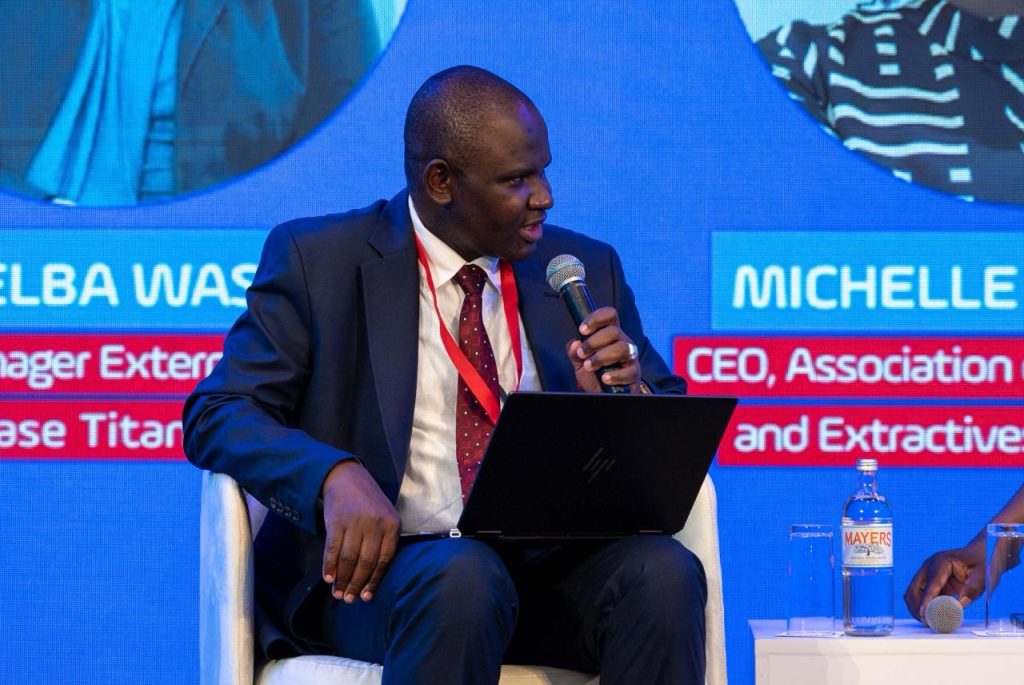
Dr.-Ing. Nashon Adero, Dean of the School of Mines and Engineering, Taita Taveta University (TTU), moderated the session. In his opening remarks, he underlined the key role of minerals in ensuring decent living standards for all humanity and civilisation with dignity, adding that all the stages of civilisation are named after the products of mining: Stone Age, Bronze Age, Iron Age, and Silicon Age.
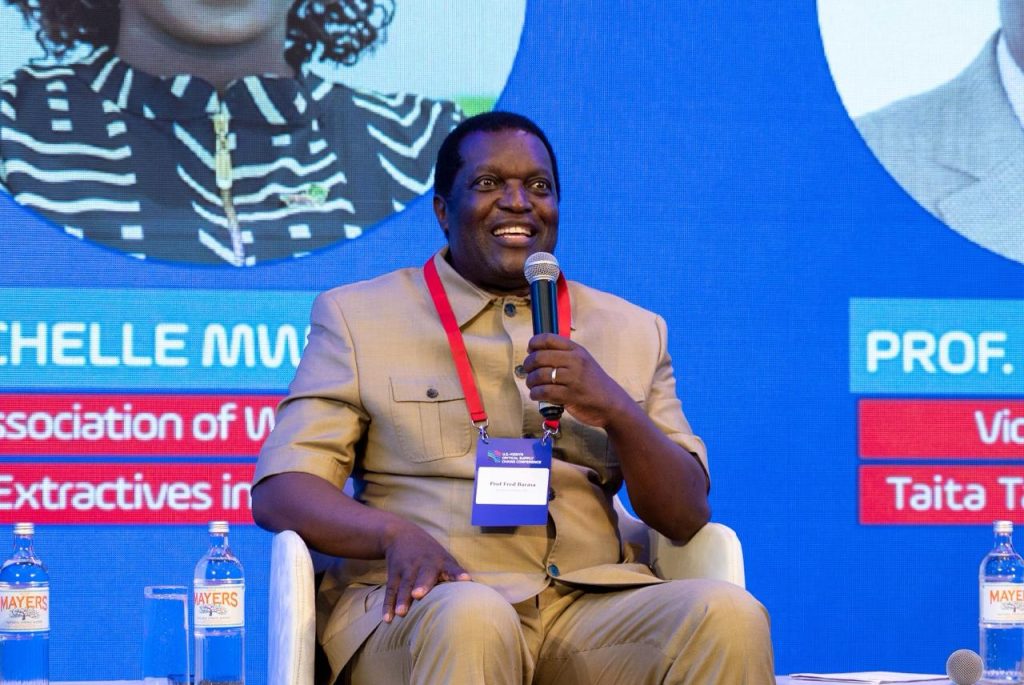
TTU was represented on the panel by Prof. Fred Barasa, the Vice Chancellor. The other panel members were Dr. Melba Wasunna (General Manager, External Affairs, Base Titanium Ltd) and Michelle Mwambela (CEO, AWEIK).
Engineering Kenya’s academia–industry pipeline
The big idea: a workforce pipeline is not a random outcome; it is an engineered system. Critical minerals are not “critical” solely because of geology; they are critical because they sit inside a delicate and complex supply chain facing vulnerabilities. Again, harnessing them requires competence: the technician who maintains uptime, the engineering supervisor who enforces standards, the professional who understands ESG and responsible sourcing documentation, and the innovator who can move value addition from aspiration to reality. The panel’s shared message was simple: we cannot talk value addition without talent addition—and talent must be built deliberately, jointly, and measurably.
Skills gaps: the “missing middle” is the silent bottleneck
From the industry operator’s lens, Dr. Wasunna pushed us to stay practical on what constrains projects in the mining sector. Three gaps stood out in the discussion: work-ready technical competence, a disciplined safety and compliance culture, and baseline digital/data literacy for modern operations. She attested to the necessity of progressive practical exposure for Kenya’s (and TTU’s) mining graduates to complement their solid grounding in theory, which she has found impressive—a tailwind accelerating their performance as they advance fast up the mining industry management ladder. She also shed light on the tiered approach employed at Base Titanium Ltd to do justice to local content and local host communities as they engaged in the mining activities in their region.
Then came the real punchline: the “missing middle”—foremen, supervisors, and mid-level managers who translate plans into consistent day-to-day execution. Without this stem layer, even the best graduates and best equipment underperform. This is why TVET training remains a prime area of focus for skills development to produce a critical mass of human capital for Kenya’s nascent mining sector.
To reinforce the academic angle, Prof. Barasa pointed out the graduation model at TTU that empowers holders of lower-level certificates to advance through diploma-level qualifications up to professional bachelor’s degrees and postgraduate degrees.
Curriculum alignment and graduate readiness
Prof. Fred Barasa framed the skills capacity issue from the university and education pipeline side. He underscored that the TTU mining education curriculum is very well aligned to address the mining industry needs, in Kenya and globally. This fact has been evident in what TTU mining graduates can safely and competently handle upon market entry—standards familiarity, equipment exposure, SOP discipline, and data literacy. He shared examples of TTU graduates already thriving in their own mining-related enterprises, in government as mining engineers, in international mining companies as industry experts, and in globally renowned universities such as Penn State, Nevada, New Mexico Tech, and TU Bergakademie Freiberg as researchers and lecturers. This captivating account illustrated the profound vote of confidence in the quality of graduates TTU has been producing over the years. He challenged the Government of Kenya to enhance the research budget to help boost the production of novel research products from Kenyan universities.
The international audience was made aware that young innovators, students and alumni from TTU, have already been crowned national champions for innovating winning and bankable innovations for mine safety and logistics optimisation. If the evidence of this ready workforce the university has produced for the mining industry was solid and convincing, then even more compelling were the prospects for long-term training collaboration between TTU and universities in the United States, the Colorado School of Mines being a ready working example. A professor from the University of South Dakota is already at TTU to help establish a BSc programme in Geology with environmental orientation.
The panel converged on a candid truth: theory is often strong; it is practical exposure that is uneven. However, the gap is fixable—but only with structured training support and co-mentorship involving both faculty and industry.
Hands-on training constraints: expensive labs, slow cycles—and solvable design problems
Universities do not score low on practice because they dislike it; they score low because modern equipment is costly, site access is constrained, instructor upskilling must be continuous, yet the budgets are constrained, and programme accreditation cycles are often slow. Yet, the discussion emphasised realistic fixes: shared training centres and simulators, industry-supported equipment models, structured internships with clear tasks, and CPD-style refreshers that keep instructors current with industry trends. This is where collaboration stops being ceremonial and becomes operational, fruitful, and sustainable.
Partnerships that work: from ad hoc goodwill to governed programmes
Dr. Melba Wasunna and Michelle Mwambela repeatedly revisited partnership models that can be scaled: structured apprenticeships with mentors and assessments that recognise prior learning or “stackable micro-credentials”, co-taught modules, and joint innovation pilots and clear operational outcomes (safety, uptime, cost, quality). In other words: governance, key performance indicators (KPIs), and continuity—not one-off MoUs that die quietly after the photos, fading out right after the cameras leave as a mere display of public relations.
Certification, inclusion, and ESG: where competitiveness meets character
Michelle Mwambela anchored the human side of competitiveness: responsible sourcing expectations are rising, gender justice—human rights checks and justice to women by nurturing them from early stages in the basic education system to be future change agents and managers in the mining industry, community engagement, grievance resolution mechanisms, and transparent reporting. She advocated ESG reporting, compliance, and community relations—while making inclusion practical through mentorship and safe workplace policies. Inclusion, in this framing, is not charity; it is a performance and retention strategy.
The closing commitments
We closed with an action-oriented spirit: the US to partner with Kenya in technology and skills transfer to deliver on human capital for sustainable mining solutions and local value addition to Kenya’s largely undeveloped mineral wealth, while promoting inclusive economic empowerment and shared prosperity from her vast mineral endowment. Kenya must advance from extraction to value addition—and, critically, design policies and partnership models that are sustainable. The session’s outcome was not a perfect blueprint, but a clearer shared direction: align curriculum with real industry roles, build the missing middle, formalise apprenticeships, fund shared infrastructure for capacity building, and treat ESG and inclusion as core supply-chain capabilities. For in the end, critical minerals without critical skills is just another ambitious target—one which fails due to the absence of the system, goodwill, and disciplined metrics required to deliver with intergenerational equity.